
How to Remove Black Mould in London Flats Without Breaking Your Tenancy Agreement

Alexandra Iftimi
Head of Housekeeping Services
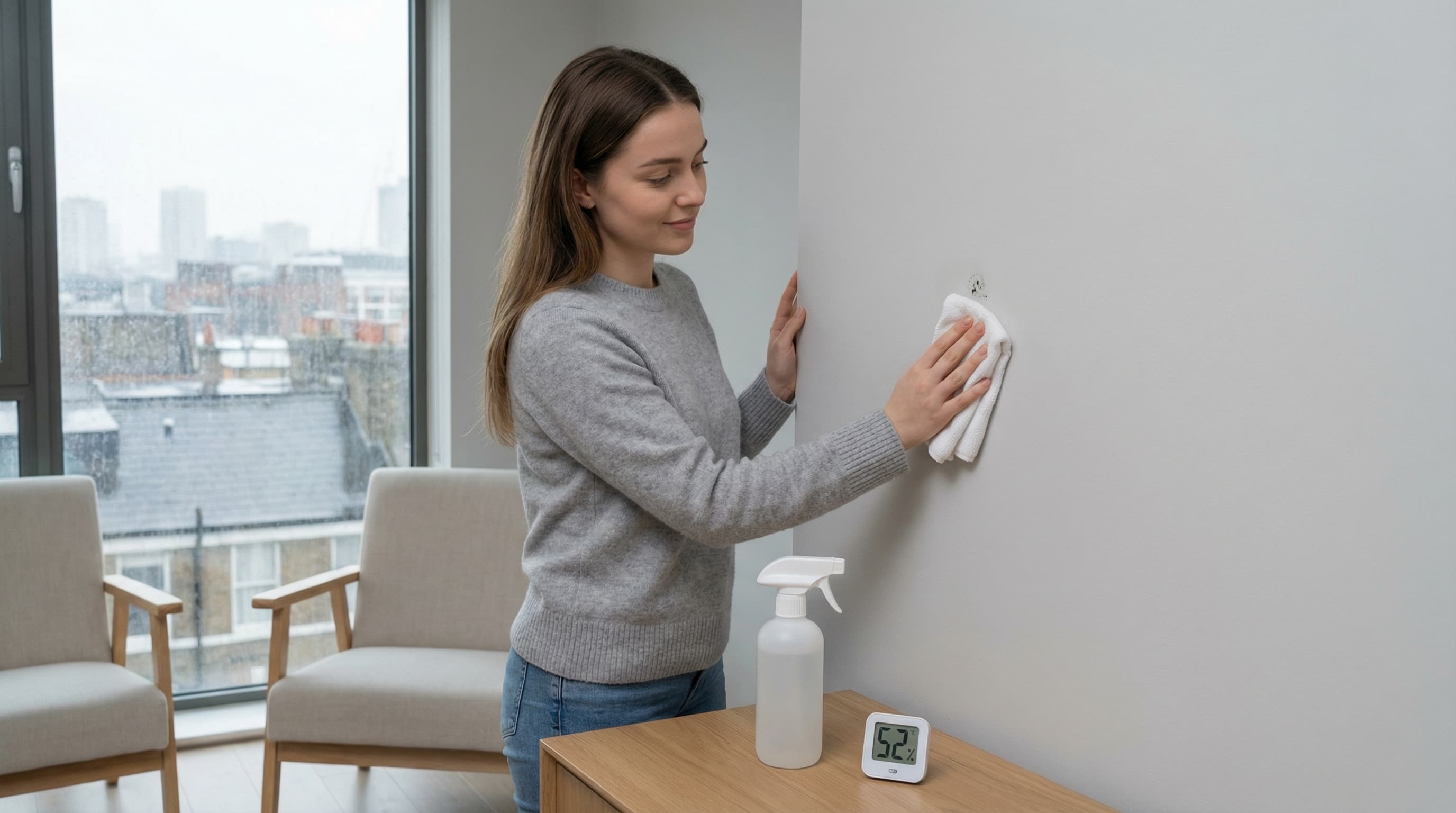
Living with black mould London flat feels serious because it harms health and can risk the deposit. Many London flats are old, damp, and closely checked when tenants leave. One careless cleaning can damage paint and upset a landlord. This guide focuses on safe steps that protect health and tenancy.
This guide explains what tenants can handle themselves and what needs expert help. It shows how to remove mould without damaging paint and avoid lease trouble. It avoids harsh scrubbing or strong chemicals. Each step fits normal wear rules and tenancy mould rights.
The advice is based on HHSRS guidance and the 2026 tenancy standards used in London. It comes from real rental cases, not theory. Following this helps tenants act legally and calmly. It also gives proof if landlord action is later needed.
The 24-Hour Triage — What to Do the Moment You Discover Black Mould?
The first steps taken on the first day matter more legally than cleaning fast. Many tenants rush to wipe marks and lose proof without knowing it. An expert always advises to slow down and think of records first. These actions protect tenant rights and avoid later blame.
Step One — Create an Evidence Log Before You Clean Anything
- Take clear photos with wide shots and close-ups of the mould.
- Capture nearby windows, walls, and furniture to show airflow and use.
- Keep timestamps, room names, and dates saved safely for sharing.
Step Two — The "1-Metre Rule" Safety Check
- If mould covers more than one square metre, stop home cleaning.
- Large areas release more spores and can harm breathing for those with asthma, allergies, or compromised immune systems
- This also supports mould tenant responsibility limits in disputes.
Step Three — Start a Damp Diary
- Note the humidity morning and night using a simple hygrometer.
- Write heating use, window opening, and drying habits daily.
- This data provides clear evidence of landlords' duties regarding mould.
The Wipe-Test Protocol — Is This Your Responsibility or the Landlord's?
In London, whether a landlord must deal with mould depends on the cause, not how bad it looks. Many homes show black marks, but the reason behind them determines who must act. This guide helps tenants know exactly when they should clean mould and when the landlord must intervene.
Condensation Mould (Usually Tenant's Responsibility)
This type appears in cold areas like windows, ceilings, and corners. It's common in winter and usually stays on the surface. Condensation mould often improves when rooms are aired, moisture is controlled, and daily habits change. Tenants are generally expected to manage this type of mould.
Penetrating or Rising Damp (Landlord Responsibility)
This damp returns even after cleaning and drying. Signs include soft plaster, white salt marks, or peeling paint. It's often caused by leaks, damaged walls, or ground moisture entering the property. Landlords are legally responsible for fixing this type of damp.
The "Wipe Test" Explained
If a mark wipes away easily and doesn't return quickly, it is likely condensation, usually the tenant's responsibility. If a mark smears, stains deeply, or returns quickly, it may indicate structural damp, typically the landlord's responsibility.
Important: Wiping is only a preliminary indicator. Some structural damp can be wiped away superficially but reappears quickly. This method is not a definitive or legal test.
Legal Anchor — Section 11
Section 11 of the Housing Act requires landlords to repair the structure and exterior of the property. Structural damp falls under the landlord's legal duty in England.
The Non-Destructive Cleaning Kit — Remove Mould Without Losing Your Deposit
Cleaning mould the wrong way can easily ruin walls and cost tenants their deposit. Using harsh chemicals or scrubbing too hard often damages paint or plaster. This guide shows safe, effective ways to remove mould without damaging paint and keep your rental in top condition.
Why Bleach Is a Deposit Risk in London Rentals
- High water content in bleach soaks porous plaster, causing permanent damage.
- Bleach only lightens the colour; it does not kill the mould roots.
- Landlords may claim "betterment" if the wall surface is visibly changed.
The White Vinegar + Dwell-Time Method
- Use white vinegar with at least 5% acetic acid.
- Leave it on the mould for around 60 minutes before wiping.
- This method breaks down mould cell walls without stripping paint or leaving marks.
The "Wipe and Dry" Rule (The 90% Most Tenants Miss)
- Always dry the surface immediately after wiping.
- Use disposable microfibre cloths to prevent spreading spores.
- Quick drying stops regrowth from leftover moisture.
What NOT to Do (Common London Tenant Mistakes)
- Painting over mould without cleaning it first.
- Scrubbing with abrasive pads that damage walls.
- Sealing or wallpapering over damp spots without fixing the moisture problem.
| Method | Effective on Roots | Paint-Safe | Deposit Risk |
|---|---|---|---|
| Bleach | No | No | High |
| White Vinegar | Yes, it can affect small surface mould roots | Yes | Low |
| Specialist Encapsulating Spray | Yes | Yes mostly safe | Very Low |
London Flat Reality — Why Mould Keeps Coming Back Even After Cleaning
Cleaning mould in London flats often feels like a never-ending battle. In many cases, it's not just about hygiene; it's the building itself. Mould Victorian conversion flats tend to have structural quirks that trap moisture and make the problem return quickly. Without understanding these, no amount of scrubbing will keep it away.
Victorian Conversions & Solid Brick Walls
- These flats often have solid brick walls with no cavity insulation.
- Cold bridges can form where walls meet floors or ceilings, but the extent of condensation and mould growth depends heavily on insulation, heating, and ventilation.
- Surface temperatures may reach the dew point more quickly on uninsulated walls, potentially encouraging mould growth in areas with poor airflow or high humidity.
The 40–60% Humidity Benchmark (Your Red Line)
- Humidity levels should stay between 40–60%.
- Below 40%, the air is too dry, which can damage wood and paint.
- Above 60%, mould spores start to settle and grow quickly.
Ventilation Hacks That Actually Work in Winter
- Keep trickle vents open even in cold months.
- Cross-ventilate rooms for 10 minutes each day.
- Short bursts of airflow prevent mould without huge heat loss.
The Furniture Gap Rule (100mm That Saves Flats)
- Keep wardrobes at least 10cm from external walls.
- This small gap allows air to circulate like a chimney.
- Prevents hidden mould behind furniture, where it can go unnoticed.
How to Get Your Landlord to Fix Mould in London Without Risking Eviction?
Tenants often hesitate to report mould, fearing retaliation. But under the 2026 law, you have more protection than before. Acting carefully and with evidence ensures your home stays safe without risking eviction. Here's how to handle it step by step.
Awaab's Law — The 10-Day Investigation Expectation
Awaab's Law now requires landlords to provide 10 working days to investigate + other stricter deadlines for work & summaries in social housing. This applies to currently only social housing; future expansion is likely, but not fully in force. Tenants can expect strong enforcement if landlords ignore complaints.
Why Withholding Rent Is Almost Always a Mistake
Stopping rent may seem like leverage, but it often backfires. It can create arrears and weaken your legal position. Clear communication and following proper procedures are a safer way to get mould fixed.
Escalating to Environmental Health (London Councils)
If your landlord doesn't act, contact your local council's environmental health team. Officers expect photos, notes, and dates of complaints. They use HHSRS standards to assess serious hazards like mould.
Retaliatory Evictions & the Renters' Rights Act 2025
The Renters' Rights Act 2025 protects tenants from eviction by ending "no-fault" Section 21 notices. Authorities' improvement notices can prevent unlawful evictions, and knowing your rights empowers tenants to act confidently.
The "Mould-Proof Flat" Strategy — Prevent Recurrence Without Touching the Landlord's Paintwork
Cleaning is only half the battle; long-term prevention protects your health, your tenancy, and your deposit. Tenants can stop black mould from coming back by taking practical, non-destructive steps that fit into daily life. These actions are safe, easy to implement, and fully compliant with tenancy agreements.
Monitor & Control Humidity
To prevent black mould that London tenants face, keep indoor humidity between 40–60%. Compact dehumidifiers and simple hygrometers can help monitor moisture levels. Running a small dehumidifier in damp corners or bathrooms is a low-cost, effective way to stay ahead of mould growth.
Optimize Airflow
Good airflow is key to tenant mould prevention. Keep trickle vents open, create cross-ventilation by opening opposite windows, and leave small gaps between furniture and walls. Even slight adjustments, like not pushing wardrobes directly against walls, make a big difference.
Smart Lifestyle Tweaks
Small daily habits help in safe mould control. Dry clothes near windows rather than inside rooms, avoid overfilling wardrobes, and keep minimal heating on during winter. These changes reduce moisture buildup and stop mould before it starts.
Evidence for Landlord
Recording your steps in a Damp Diary shows you are proactive. Note dehumidifier use, ventilation routines, and humidity readings. This documentation can protect your deposit and demonstrate compliance with HHSRS guidance if issues arise.
FAQs — What London Tenants Are Afraid to Ask About Black Mould
Is black mould my fault or my landlord's responsibility?
Landlords are usually responsible if mould comes from leaks, poor ventilation, or damp walls. Tenants should act quickly to report it and keep records of communications.
Can I be evicted for reporting mould in 2026?
No, tenants have legal protection. Reporting black mould does not justify eviction under UK tenancy laws.
Can I clean mould myself in a rented flat?
Small patches can be wiped carefully with cleaning solutions, but persistent or large mould needs professional intervention.
Can I withhold rent until the mould is fixed?
Withholding rent is risky. Instead, document the issue and ask the landlord to fix it officially.
What if the mould keeps coming back after cleaning?
Recurring mould usually means structural or damp problems. Tenants should notify their landlord immediately and request a proper inspection.
When does mould become a health emergency?
If mould causes breathing issues, coughing, or allergies, seek medical help and report it to the landlord immediately.
Filed Under:
Want a professional deep clean?
Skip the hassle. Let our 5-star London housekeeping team handle the hard work for you.
Products We Recommend
HG Bathroom Cleaner
HG bathroom cleaner spray, cleans tiles, sinks and shower screens.
HG Limescale Remover Concentrate
HG limescale remover concentrate, for heavy limescale build-up.
HG Mould Spray
HG mould remover spray, kills black mould and mildew.
Contains Amazon affiliate links. Learn more.
Table of Contents
Products We Recommend
HG Bathroom Cleaner
HG bathroom cleaner spray, cleans tiles, sinks and shower screens.
HG Limescale Remover Concentrate
HG limescale remover concentrate, for heavy limescale build-up.
HG Mould Spray
HG mould remover spray, kills black mould and mildew.
Contains Amazon affiliate links. Learn more.
Our Cleaning Services
Professional cleaning services across London — book yours today

Deep Cleaning Services
Intensive deep cleaning for spring cleans, move-ins, or one-off thorough cleans covering areas beyond regular house cleaning.

End of Tenancy Cleaning
Professional end of tenancy cleaning in London guaranteed to pass landlord inspections and secure your deposit return.

Carpet Cleaning London
Expert carpet cleaning services across London using advanced equipment to remove deep stains and eliminate odors.