
Professional Cleaning Method for Small London Flats

Alexandra Iftimi
Head of Housekeeping Services
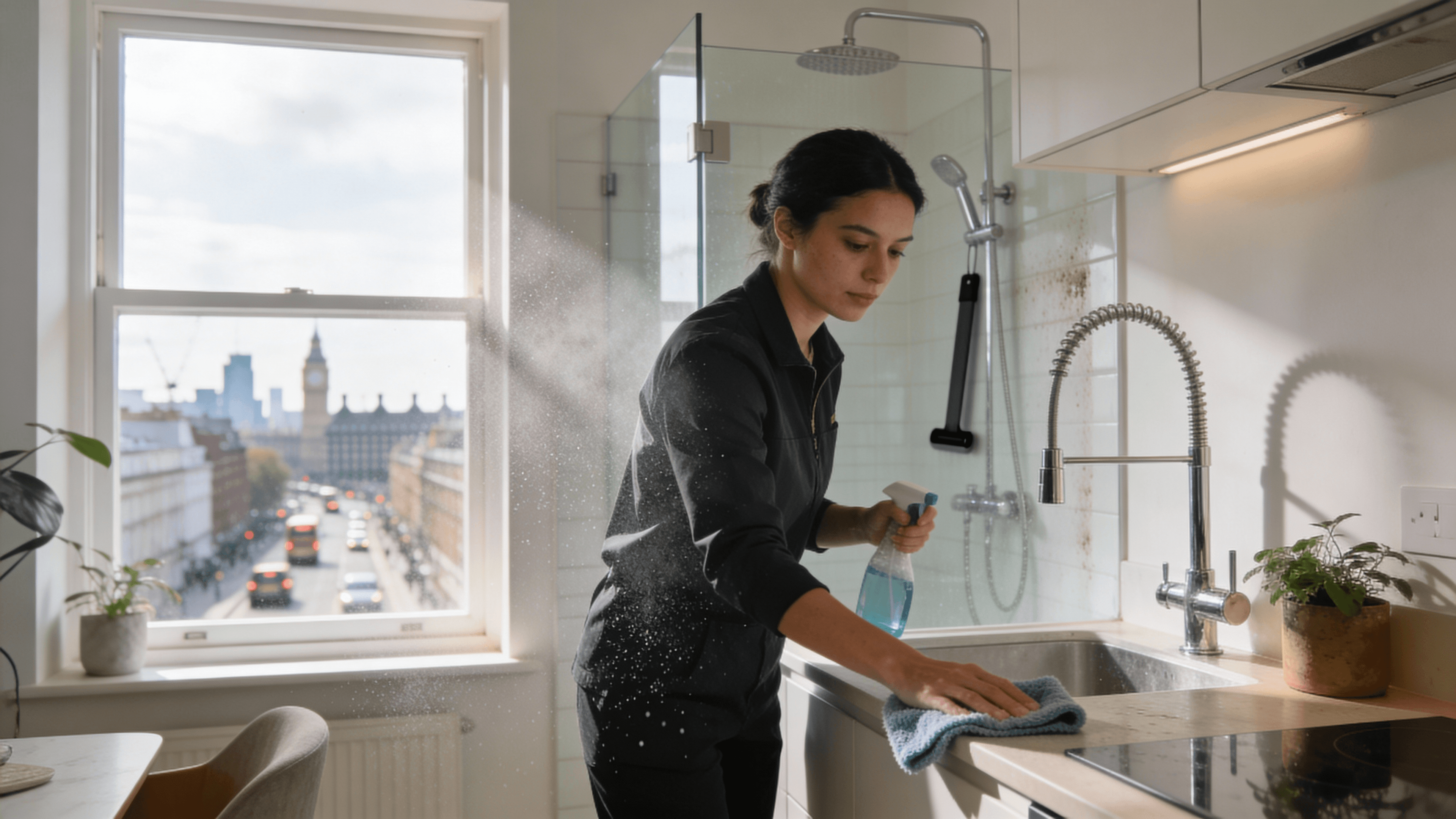
The professional cleaning method in London matters most when you live in a studio or one bed flat near busy roads. Traffic dust, Tube soot, and damp air settle fast. Even after regular wiping, grime returns within days.
In our experience cleaning compact London flats, most DIY routines fail due to fine PM2.5 dust and hard water stains. Speed cleaning spreads dirt around. Without a system, small London flat cleaning never lasts. Hard minerals leave marks on taps and tiles quickly here daily.
Professional cleaners in London use a rotational zone system, focusing on one area deeply each visit. This professional cleaning method in London controls buildup instead of chasing mess. Readers will learn simple London flat cleaning tips that fit real city living.
Why Do Small London Flats Get Dirtier Faster Than You Expect?
The London flat dust problem is real, especially in small homes across the city. Many people think it is poor cleaning, but London’s environment plays a big role. Traffic, water quality, and compact living spaces make dirt return faster, even when you clean regularly inside flats.
The Reality of London “Grey Dust” (PM2.5 & Tube Soot)
Diesel traffic and the Underground create grey dust that settles. This city's soot on London flats comes from brake dust, tyres, and PM2.5 that slip in through windows and doors. Dry dusting lifts it into the air, spreading London pollution indoors instead of removing it.
Hard Water Limescale and Grime Bonding
London hard water cleaning is harder than most people expect. Minerals dry on taps, tiles, and glass, leaving a chalky layer that grips dirt. When limescale stays, it bonds with soap and grime, slowly turning simple marks into stains that need strong cleaners later on.
Small Space Physics – Why Dirt Feels Worse
In small flats, dirt feels heavier because the air volume is limited. Micro dirt, moisture, and smells build up faster, so even minor mess stands out. Dust settles on shelves, walls, and corners, making small space physics the reason flats look dirty quickly everywhere often.
The Rotational Zone System Professionals Use in Small Flats
The rotational cleaning system is a professional flat cleaning method I have used in many London flats where space is tight. Instead of doing a full scrub every week, this system spreads deep work across the month. Flats stay cleaner for longer, and cleaning never feels heavy. It suits busy London life.
The Maintenance Clean (Every Week)
The maintenance clean runs every week and never gets skipped. Floors are vacuumed and mopped, surfaces wiped, bins emptied, and switches cleaned. This prevents surface grime, food smells, and bathroom odours from taking hold.
The 20-Minute Deep Focus Zone
The 20-minute deep focus zone is where results show. One area gets detailed attention using a small flat deep cleaning mindset. This stops limescale, grease, and soot from bonding, which saves hours later.
Example 4-Week Rotation for a 1-Bed Flat
Below is an example rotation I’ve used in zone cleaning of London flats. It fits a one-bed layout and mirrors how professional teams plan work without overloading any single visit.
| Week | Focus Zone | Professional Target |
|---|---|---|
| Week 1 | Bathroom | Limescale, drains, grout |
| Week 2 | Kitchen | Cabinet fronts, filters |
| Week 3 | Living Area | Upholstery, vents |
| Week 4 | Bedroom | Skirting, under-bed |
This professional flat cleaning method keeps small homes calm, predictable, and cleaner for longer, especially in busy London rental life.
The Professional Workflow That Makes a 2-Hour Clean More Effective Than 4
Professional cleaning workflow is the main reason trained cleaners finish faster and still leave better results in London flats. Many homes here collect fine dust from roads, trains, and old buildings, so cleaning in the wrong order wastes time. I’ve seen people clean for hours and still feel the flat looks dull. Order matters more than effort, especially in compact London spaces.
The Top-to-Bottom Gravity Rule
In top-to-bottom cleaning of London homes, professionals always start high and move down. Dust from ceilings, shelves, and cupboards slowly falls as you clean. If the floors are cleaned first, they get dirty again within minutes. This rule alone saves at least 30–40 minutes in an average flat.
Dry-to-Wet Sequencing
Dry to wet cleaning means removing loose dust before using water or sprays. When dust meets liquid, it turns into sticky marks that are harder to remove. This step is very important for engineered wood and stone floors common in London flats. Professionals vacuum and wipe dry surfaces first, then mop and deep clean.
High-Touch Point Prioritisation
Efficient flat cleaning focuses on how a home is used, not how it looks. Light switches, door handles, taps, and remotes collect more germs than floors. Professionals clean these areas early so bacteria do not spread through clothes and hands. This approach keeps homes healthier, not just cleaner.
Professional Micro-Hacks That Make Small Flats Stay Clean Longer
London cleaning hacks are less about deep cleaning and more about stopping mess before it settles. In small London flats, dust, grease, and moisture build up faster because of traffic pollution and limited airflow. After years of working in compact homes near busy roads and tube lines, these habits have saved me real time. They are simple, proven, and easy to keep up with even after long workdays.
The Damp Dusting Rule (Never Dry Dust in London)
Dry dusting in London just pushes soot from roads and rail lines back into the air. A slightly damp microfiber cloth traps dirt instead of spreading it across shelves and screens. This is one of those professional cleaning tricks that feels small but changes everything. It’s especially useful for flats near main roads or lower floors.
-
Lightly mist the cloth, never the surface
-
Start from higher shelves and work down
The 30-Second Squeegee Habit
After every shower, a quick squeegee on tiles and glass stops limescale before it hardens. This London limescale prevention habit avoids that cloudy build-up that later needs harsh chemicals. Doing this daily saves hours of scrubbing at the end of the month. It’s one of the most effective small flat cleaning tips I’ve seen.
-
Focus on corners and grout lines
-
Keep the squeegee inside the shower
Airflow Management During Cleaning
London flats trap moisture, especially in winter when windows stay shut. Open opposite windows for just ten minutes while cleaning to push damp air out. This reduces mould risk and stops cleaning smells from lingering. It’s a simple habit that keeps the flat fresher for longer.
What NOT to Do in a Small London Flat (The Pro Warnings)
Cleaning mistakes in London flats often come from wrong methods, not carelessness. In small London homes, one habit can harm surfaces, air, and health. Professionals prevent damage, not just remove dirt. These warnings come from years inside tight flats.
The Bleach Trap
Bleach dangers in small flats are real because most London flats have weak ventilation. Using bleach in tight bathrooms or kitchens fills the space with sharp fumes. It also damages stone counters, grout lines, taps, and glossy cabinets over time. Pros avoid bleach here and use milder cleaners with fresh air instead.
Ignoring Vertical Surfaces
Bad cleaning habits in London often include skipping walls, blinds, and picture frames. London traffic soot and indoor dust stick to vertical surfaces fast. Miss these areas, and the air feels dusty again within days. Wiping verticals weekly keeps flats fresher and cuts repeat cleaning.
Fast Answers to Small London Flat Cleaning Questions
How long does it take to clean a 1-bed London flat?
For regular upkeep, a one-bed or studio flat cleaning job takes about two hours. This includes floors, kitchen surfaces, bathroom wipe-down, and dusting. A move-out clean needs four to six hours due to ovens, skirting, and limescale.
How do I stop London dust from entering my flat?
Open windows early morning or late evening when traffic is low. Keep them shut during rush hours if you face a busy road. Use a vacuum with HEPA filtration to trap fine dust. Door mats inside help stop dirt from spreading.
How do I remove limescale in London bathrooms?
Hard water causes fast buildup on taps and tiles. A citric acid mix at a 1:5 ratio with warm water works well. Leave it for ten minutes, then wipe gently. This method is safe and effective.
Is it worth hiring a cleaner for a studio flat?
Yes, because dirt feels worse in single-room homes. Cooking and living in one space spreads grime quickly. A professional clean saves time and effort. It keeps the flat fresh longer.
The Cost of Ignoring Professional Methods in London Flats
London flat deposit cleaning is often delayed until the last week, and that is where most tenants lose money. In many London flats, I have seen landlords deduct deposits for marks that started small. When dirt sits too long, normal cleaning no longer works.
Hard water leaves silent scars, and the limescale damage London homes face is costly to fix. Bathroom taps, tiles, and kettles wear out faster when ignored. I have watched tenants pay for replacements that simple early cleaning could have avoided.
The professional cleaning benefits go beyond looks and help make indoor air safer. Dust, grease, and mould affect breathing, especially in older London buildings. Acting early saves deposits, protects fixtures, and keeps your flat ready without stress before viewings and inspections happen at short notice.
Filed Under:
Want a professional deep clean?
Skip the hassle. Let our 5-star London housekeeping team handle the hard work for you.
Products Used in Our Flat Cleaning Method
Flash Multi-Purpose Cleaner
Flash Spray & Wipe antibacterial multi-purpose cleaner for everyday surfaces.
Dettol Surface Cleanser
Dettol antibacterial multi-purpose surface cleaner, 479.1g, pack of 3.
Zoflora Disinfectant
Zoflora Midnight Blooms multipurpose disinfectant trigger spray.
Astonish Multi-Purpose Cleaner
Astonish Special Aromatic Edition multi-purpose anti-bac cleaner.
Contains Amazon affiliate links. Learn more.
Table of Contents
Products Used in Our Flat Cleaning Method
Flash Multi-Purpose Cleaner
Flash Spray & Wipe antibacterial multi-purpose cleaner for everyday surfaces.
Dettol Surface Cleanser
Dettol antibacterial multi-purpose surface cleaner, 479.1g, pack of 3.
Zoflora Disinfectant
Zoflora Midnight Blooms multipurpose disinfectant trigger spray.
Astonish Multi-Purpose Cleaner
Astonish Special Aromatic Edition multi-purpose anti-bac cleaner.
Contains Amazon affiliate links. Learn more.
Our Cleaning Services
Professional cleaning services across London — book yours today

Deep Cleaning Services
Intensive deep cleaning for spring cleans, move-ins, or one-off thorough cleans covering areas beyond regular house cleaning.

End of Tenancy Cleaning
Professional end of tenancy cleaning in London guaranteed to pass landlord inspections and secure your deposit return.

Carpet Cleaning London
Expert carpet cleaning services across London using advanced equipment to remove deep stains and eliminate odors.